Reviewing the 3D Christmas Ball Vector for Embroidery
As a designer who spends more time staring at stitch simulations than I do sleeping, I have learned that not every pretty graphic translates well to thread. We often get swept up in the visual appeal of digital assets, forgetting the physical realities of needle, bobbin, and fabric. Recently, I pulled up the 3d Christmas Ball Graphic Design Vector to evaluate its potential for a upcoming holiday client project. My goal was simple: determine if this illustration could survive the transition from screen to stitch without losing its charm or becoming a logistical nightmare on the machine.
First Impressions and Visual Mood
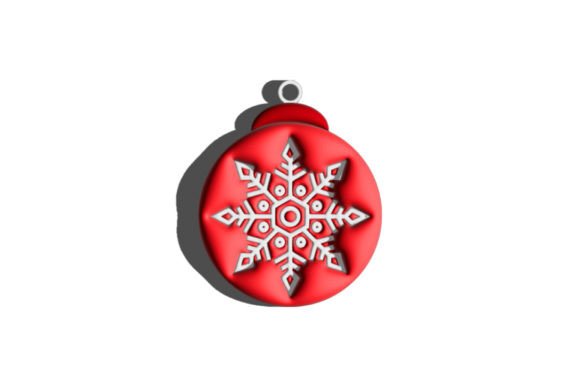
The immediate impression of the 3d Christmas Ball Graphic Design Vector is one of festive depth. Unlike flat, two-dimensional clip art, this design attempts to convey volume and reflection, which is crucial for creating a premium look in holiday embroidery. The mood it creates is warm and nostalgic, fitting perfectly into the current trend of cozy, handmade holiday decor. For an Etsy seller or a boutique owner, this visual personality is a strong selling point. It does not scream "cheap novelty"; instead, it suggests a thoughtful, curated handmade product.
However, from a technical standpoint, the "3D" effect presents specific challenges. In digital Illustrations, gradients and shadows are easy. In embroidery, we must simulate these effects through thread colors and stitch direction. The design’s layout relies heavily on contrast to show the spherical shape. This means that when digitizing or selecting a pre-digitized embroidery file, the color palette becomes critical. You cannot rely on a single red thread; you need a gradient of Reds, Maroons, and perhaps even a touch of Pink or White to achieve that rounded, shiny appearance.
Real-World Application: The Holiday Tote Scenario
To test the viability of this asset, I imagined a specific real-life scenario: a custom order for a set of reusable canvas tote bags for a local bakery’s holiday promotion. The client wanted something eye-catching but durable. The 3d Christmas Ball Graphic Design Vector seemed like a strong candidate for a tote bag design because its bold shape holds up well against the textured weave of canvas.
In this context, the design would likely be executed as a fill stitch heavy motif. The spherical nature of the ball allows for smooth, sweeping stitch paths that can cover the fabric efficiently. If I were producing this for a small shop product, I would position the ball slightly off-center to allow for personalized text underneath, such as "Happy Holidays" or the recipient's name. This combination turns a standard graphic into a personalized gift that feels exclusive. The visual weight of the ball anchors the design, preventing it from looking flimsy on a large bag surface.
Fabric Considerations and Stitching Clarity
One of the most important aspects of reviewing any machine embroidery design is understanding where it fails. The 3d Christmas Ball Graphic Design Vector is not universally compatible with all materials. For instance, using this on thin, stretchy fabrics like jersey knit for a sweatshirt embroidery project requires caution. The density required to create the 3D shading effect can cause puckering if the proper stabilizer is not used. A cut-away stabilizer would be non-negotiable here to maintain the integrity of the sphere’s shape after washing.
Furthermore, the design’s success depends on stitch density. If the digital file is too dense, the thread will pile up, obscuring the subtle color changes that create the 3D illusion. If it is too sparse, the fabric will show through, breaking the illusion of a solid, shiny ornament. For textured fabrics like towels or wool blends, the design needs to be simplified. Complex gradients get lost in the pile of a towel. In such cases, I would recommend reducing the number of color stops and relying on broader blocks of color to ensure stitching clarity.
Challenges with Small Hoops and Detailed Areas
While the design shines on larger items like pillows, blankets, or aprons, it struggles in confined spaces. Attempting to stitch this 3d Christmas Ball Graphic Design Vector in a small 4x4 inch hoop, particularly on a cap or a baby’s bib, risks losing detail. The curved highlights that define the "glass" look of the ornament may become indistinguishable blobs of thread if scaled down too far. For baby embroidery or small embroidered patch projects, I would advise simplifying the design or removing the inner reflective details entirely, focusing instead on the outer silhouette and a simple highlight.
Additionally, dark fabrics present a unique challenge. If you are stitching a red ball on a black navy sweatshirt, the shadow areas of the 3D effect will disappear. To counter this, you might need to add a white or light gray underlay or outline to separate the design from the background. This is a common issue in commercial embroidery that beginners often overlook. Testing the design on scrap fabric of the same color and texture as your final product is essential before committing to the final piece.
Enhancing Product Value and Brand Consistency
From a business perspective, the quality of your design assets directly impacts customer trust. A well-executed 3d Christmas Ball Graphic Design Vector can elevate a basic item into a premium finished product. When customers see clean lines, smooth gradients, and no visible gaps, they perceive higher value. This is crucial for craft business owners who rely on repeat customers and positive reviews.
Using consistent design elements across your product line helps build brand recognition. If this vector fits your aesthetic, it can be adapted for various design assets, including printable mockup previews for your online store. Showing customers how the design looks on a pillow cover, a kitchen towel, and a custom apparel item helps them visualize the end result, increasing buyer engagement and conversion rates.
Practical Notes for the Embroiderer
Before you load this design into your machine, consider these practical steps to ensure success:
- Check the License: Always confirm whether the digital embroidery file allows for commercial use. If you plan to sell items made with this design, ensure your license covers commercial embroidery rights.
- Test Stitch Out: Never skip the test stitch. Use scrap fabric to check for thread breaks, nesting, or registration issues.
- Contrast is Key: Review your thread chart. Ensure there is enough contrast between the shades used in the ball to make the 3D effect visible from a distance.
- Hoop Size Matters: Confirm that the design fits comfortably within your hoop size, leaving enough margin for the frame to grip the fabric securely.
- Stabilizer Selection: Match your stabilizer to your fabric. Heavy designs on light fabrics need robust support to prevent distortion.
In conclusion, the 3d Christmas Ball Graphic Design Vector is a versatile and visually appealing asset for holiday projects. It offers a modern twist on a classic theme, suitable for a wide range of applications from home decor to apparel. However, its effectiveness relies heavily on proper execution. By paying attention to fabric choice, stitch density, and color contrast, you can transform this digital illustration into a stunning tangible product. Whether you are an experienced decorator or a hobbyist looking to upgrade your holiday gifts, this design offers a solid foundation for creative expression, provided you respect the technical limits of your machine and materials.